Johnson Controls Arabia: 50 Students Develop 18 Engineering Solutions to Real-World Industrial Challenges

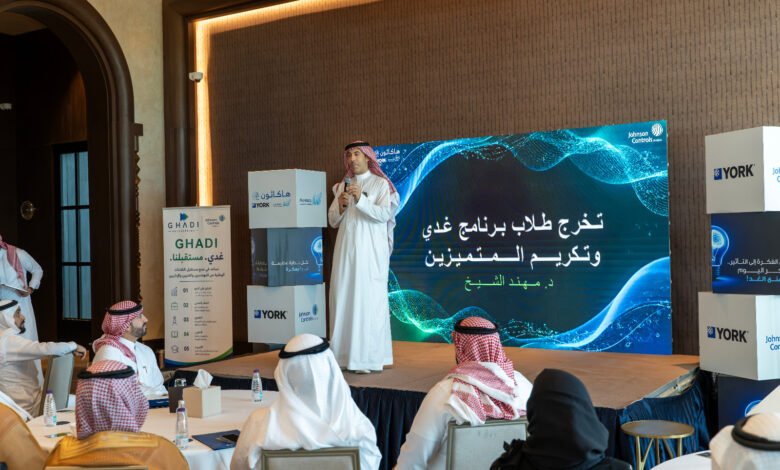
From university classrooms to a real-world manufacturing environment, Johnson Controls Arabia celebrated the achievements of a new generation of promising Saudi talent during the closing ceremony of the first Industrial University Projects Hackathon, in collaboration with the University of Jeddah. The event also celebrated the outcomes of “Ghadi” Training and Development Program.
Held on Thursday, 27 August 2026, at the Rixos Hotel in King Abdullah Economic City, the ceremony highlighted Johnson Controls Arabia’s continued efforts to develop national capabilities and foster innovation across the industrial sector.
The event featured presentations of the participating engineering projects, the recognition of the winning teams, and the announcement of the second edition of the hackathon. The ceremony was attended by the President of the University of Jeddah, His Excellency Prof. Obaid Al-Mudhaff, along with several senior university leaders.
Dr. Mohanad AlShaikh, Chief Executive Officer of Johnson Controls Arabia, emphasized that the hackathon reflects the company’s long-standing focus on investing in young Saudi talent and creating practical opportunities for students.
Dr. AlShaikh said: “This Hackathon demonstrated the value of strong collaboration between education and industry. Through the hackathon and our training and development initiatives, particularly the Ghadi Program, we continue to build sustainable partnerships with Saudi universities and help prepare a highly skilled generation of engineers and innovators capable of strengthening the competitiveness of Saudi industry and contributing to the objectives of Saudi Vision 2030.”
The first edition of the hackathon brought together approximately 50 engineering students from the University of Jeddah, who developed 18 innovative engineering projects and solutions across two main tracks: Mechanical Engineering and Industrial and Systems Engineering.
As part of its ongoing efforts to connect education with industry, the YORK Manufacturing Complex is expected to welcome its 10,000th student visitor by October 2026.
The ceremony also celebrated the achievements of the Ghadi Program, whose name reflects the meaning of “my tomorrow and my future.” The Johnson Controls Arabia initiative is designed to equip students and graduates with practical experience and professional skills while building a sustainable pipeline of qualified Saudi talent ready to join the workforce.
Since its launch, the program has welcomed more than 350 Saudis from 26 public and private universities, colleges, and educational institutions, covering a wide range of academic disciplines and training pathways across the company’s different business areas.
In 2026 alone, the program has trained more than 185 graduates to date, with Johnson Controls Arabia aiming to increase this figure to 300 trainees by the end of the year. The program has also delivered tangible employment outcomes, with more than 60 graduates securing full-time positions at the company out of over 250 trainees who successfully completed the program.
Through Ghadi, which brings together all of the company’s training and development programs for non-employees under one umbrella, Johnson Controls Arabia aims to reach more than 1500 trainees by 2030.
Young Saudis have remained at the heart of the program since its inception, with 63% of participants specializing in engineering and technical disciplines. Its training pathways have included more than 100 cooperative training opportunities, 45 summer internships, and 39 beneficiaries of the Tamheer Program, with an average training period of four months.
The Industrial University Projects Hackathon and the Ghadi Program are integral to Johnson Controls Arabia’s strategy for corporate social responsibility, sustainability, and human capital development. Through these initiatives, the company continues to support education and innovation, empower Saudi talent, and strengthen the connection between academic outcomes and the needs of the labor market and industrial sector.