Why Luxury Travellers Are Escaping Constant Connectivity to Experience Parvara
The New Luxury Is Being Offline

For years, luxury travel was defined by constant access: faster connectivity, endless availability, and experiences designed to keep guests continuously engaged. Today, however, a different shift is emerging among high-end travellers worldwide. Increasingly, people are seeking not more connection, but relief from it.
As burnout, screen fatigue, and digital overstimulation continue to shape modern lifestyles, more travellers are turning toward destinations that allow them to fully disconnect, creating demand for a new kind of travel centred around silence, presence, and mental clarity.
High in the mountains of Jabal Al Hamri in Fujairah, Parvara was created as a sanctuary where silence, stillness, and disconnection become the experience itself. Set high atop Jabal Al Hamri, where phone signal fades into the mountains, guests are invited to surrender their devices as part of a quiet ritual marking the transition away from external distraction and into stillness. Phones, notifications, and screens disappear, replaced instead by handwritten notes, guided silent walks, mountain treks, stargazing, candlelit dinners, and uninterrupted rest.
Far removed from the pace of modern life, the off-grid sanctuary replaces constant stimulation with a slower, more intentional rhythm. Days unfold through mountain walks, firelight at dusk, deep, uninterrupted sleep, and the subtle sounds of nature — wind moving through stone, footsteps across trails, and the stillness of open space.
At one point, being constantly connected became associated with success and productivity. Now, many travellers are beginning to realise that true luxury may be the ability to disconnect completely, even for a few days. People are craving environments where they can think clearly again.
This shift is increasingly redefining the future of luxury hospitality. Wellness experts and behavioural researchers continue to highlight the growing impact of digital overload on sleep quality, attention spans, stress levels, and emotional well-being. In response, travellers are gravitating toward experiences designed to reduce noise rather than add to it.
Without constant digital interruption, guests begin to feel a sense of liberation, reconnecting with rhythms often lost in everyday life: waking with the sunrise, moving slowly through the landscape, sharing uninterrupted conversations, listening fully, sleeping deeply, and becoming more aware of the world around them.
What emerges instead is a living stillness, shaped by birds crossing the valley, footsteps against stone, the crackle of firewood, wind moving across the mountain ridges, and the simple rhythm of breathing fresh mountain air.
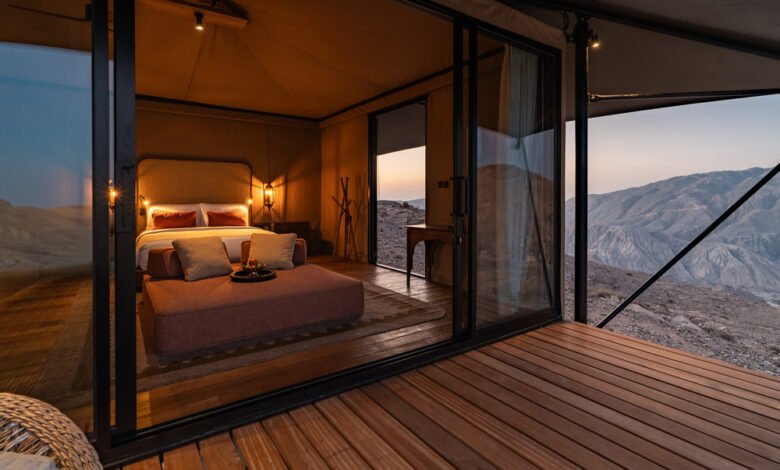
The sanctuary itself has been intentionally designed to support this slower, more grounded experience. Private luxury pavilions are carefully positioned for complete seclusion, while architecture blends quietly into the surrounding terrain. Interiors avoid excess and visual noise, favouring natural textures, soft lighting, tactile materials, and thoughtful restraint, while thoughtfully equipped with everything guests may need, from freshly ground coffee beans, healthy homemade snacks, and fresh juices to books, binoculars, hiking sticks, hot showers, and outdoor jacuzzis overlooking the mountains.
Even dining follows the same philosophy. Meals unfold slowly and without performance: fire-cooked dinners beneath open skies, breakfasts served after dawn treks, and candlelit gatherings where conversation naturally softens and guests become fully present in the moment.
Parvara’s off-grid infrastructure further deepens the feeling of retreat from modern life. With minimal visible technology, no generators, reduced artificial lighting, and carefully controlled environmental impact, the sanctuary preserves something increasingly difficult to experience elsewhere: uninterrupted stillness.
Globally, digital detox travel is becoming one of the fastest-growing areas within wellness hospitality, particularly among affluent travellers seeking emotional recovery rather than traditional luxury consumption. Yet Parvara approaches the concept differently. The sanctuary does not reject technology entirely; instead, it creates a temporary distance from it, allowing guests to reconnect more intentionally with themselves, others, and the natural world.