AERZEN VP Shares Strategic Insights on Blower and Compressor Contingency Planning at Dubai Cement Conference

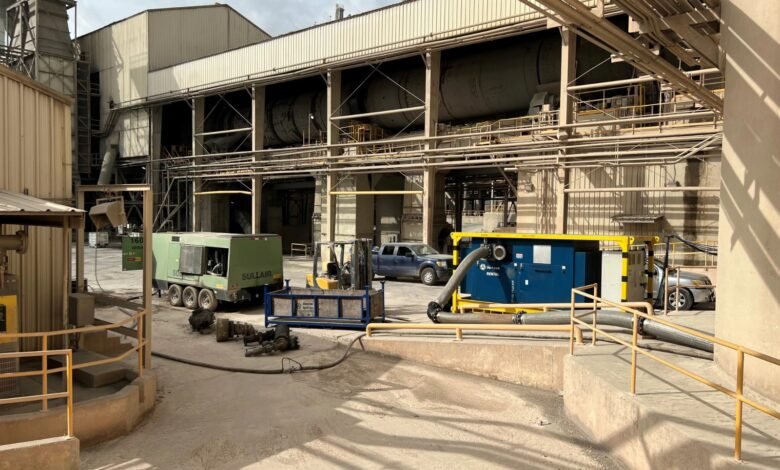
Matt Piedmonte, Vice President and General Manager of AERZEN Rental Solutions for the Americas and Middle East, highlighted the critical role of blowers and compressors in ensuring continuous production across cement, gypsum, and industrial plants. His insights—recently featured in World Cement—demonstrated how strategic contingency planning for these essential machines can prevent costly downtime, safeguard productivity, and support the fast-growing industrial landscape in the GCC and wider Middle East.
Blowers and Compressors: Essential for Operational Continuity
Process blowers and compressors are low-pressure, high-volume machines that play a vital role in industrial operations. They support pneumatic conveying, silo fluidization, combustion air supply, and other critical functions, typically operating at pressures between 400 and 3,500 mbar(g) and airflows ranging from 10 to 300 m³/min.
Piedmonte explained that although routine maintenance—such as vibration monitoring, oil analysis, and spare parts management—is essential, unexpected failures can still occur. These failures pose risks including production delays, financial losses, and disruptions to customer delivery commitments.
A Practical Three-Step Strategy for Contingency Planning
According to Piedmonte, effective contingency planning revolves around three core components:
1. Defining Process Requirements
He emphasized the importance of evaluating actual airflow and pressure needs for each process. Many fixed blowers and compressors are sized for peak load, while real-world operations often require lower flow rates. This operational flexibility broadens the range of contingency options—including more efficient and cost-effective rental solutions.
2. Evaluating Response Options
Facilities, he noted, could choose between permanent spare units, OEM exchange programs, or rental equipment. Piedmonte underscored the advantages of electric rental blowers and compressors, which deliver reliable performance, integrate seamlessly with existing electrical systems, and offer a safer and more economical alternative to diesel-driven units.
3. Developing Implementation Plans
Piedmonte stressed that preparation was critical—pre-arranging mechanical and electrical connections, securing rigging and lifting equipment, and partnering with rental providers capable of rapid deployment. Comprehensive planning ensures that emergency installations occur smoothly, minimizing downtime and controlling unplanned costs.
Global Case Studies Demonstrating Proven Success
His presentation and article highlighted several real-world examples:
• Gypsum Plant, Saudi Arabia: Recurring blower stage failures were mitigated through rental blowers and compressors, allowing rapid replacement during emergencies. Data gathered from rental units informed future equipment upgrades, reducing the risk of shutdowns.
• Cement Plant, Texas, USA: Transitioning from a costly diesel-driven compressor to an electric rental solution stabilized operations and saved more than $700,000 in rental and fuel costs.
• Repackaging Plant, Canada: Rental blowers and compressors powered by generators supported an accelerated production start-up, enabling operations to begin two months earlier than planned.
“Proactive contingency planning for blowers and compressors is a strategic investment,” said Piedmonte. “When plants understand their process requirements, evaluate all response options, and prepare detailed implementation plans, they can maintain reliable, uninterrupted operations—even during unexpected failures.”
Supporting Industrial Growth and Resilience Across the GCC
The Middle East has experienced rapid expansion in cement, gypsum, and construction materials, making equipment reliability essential for meeting infrastructure demand, production schedules, and sustainability targets. Rental solutions provided operational flexibility without large capital expenditure, making them highly suitable for the GCC’s dynamic industrial market.
During the Arab International Cement & Building Conference and Exhibition in Dubai, Piedmonte presented best practices in contingency planning for blowers and compressors. He demonstrated how engineered rental solutions enhance reliability, reduce emergency costs, and strengthen operational resilience—a session that attracted strong interest from plant managers, engineers, and industrial decision-makers from across the region.
About AERZEN Rental Solutions
AERZEN is a global leader in engineered rental blower and compressor solutions, supporting industrial facilities in maintaining continuous operations while improving efficiency and reducing downtime. With decades of expertise and a strong presence in the Middle East, AERZEN delivers tailored rental solutions that align with operational objectives and sustainability goals.
“Our mission is to help industrial plants operate with maximum reliability and efficiency,” added Piedmonte. “By combining proactive contingency planning with high-performance rental equipment, we enable customers to focus on production without the risks associated with unexpected equipment failures.”